
ACP2 (acid phosphatase 2, lysosomal)

symbol:
ACP2
locus group:
protein-coding gene
location:
11p11.2
gene_family:
alias symbol:
LAP
alias name:
lysosomal acid phosphatase
entrez id:
53
ensembl gene id:
ENSG00000134575
ucsc gene id:
uc001nei.3
refseq accession:
NM_001610
hgnc_id:
HGNC:123
approved reserved:
1986-01-01
11p11.2

ACP2(酸性磷酸酶2,Acid Phosphatase 2)是一种溶酶体酶,属于酸性磷酸酶家族(Acid Phosphatase Family),该家族成员主要功能是催化磷酸单酯的水解反应,参与磷酸代谢。ACP2在溶酶体中高度表达,负责分解细胞内的磷酸化合物,如核苷酸、磷脂和糖磷酸酯,从而维持细胞内磷酸稳态。其表达产物是一种糖蛋白,依赖锰离子(Mn²⁺)作为辅因子发挥最佳活性。ACP2的主要作用位点是溶酶体,但也可能存在于其他酸性细胞器中。若ACP2发生功能丧失突变,可能导致溶酶体贮积症(Lysosomal Storage Disorders),例如一种罕见的神经退行性疾病——脑腱黄瘤病(Cerebrotendinous Xanthomatosis, CTX)的部分病例与ACP2缺陷相关,表现为胆固醇代谢异常和神经系统损伤。此外,ACP2表达异常还与某些癌症(如前列腺癌、乳腺癌)的进展相关,可能通过影响细胞凋亡或增殖信号通路发挥作用。若ACP2过表达,可能加剧溶酶体功能紊乱,导致细胞毒性或异常自噬;而表达降低则可能引起底物累积,引发代谢障碍。ACP2基因家族(包括ACP1、ACP3等)的共性是均含有保守的磷酸酶结构域,偏好酸性pH环境,并参与磷酸基团的移除反应。目前“酸性磷酸酶2”的中文译名较为统一,但需注意其与前列腺特异性酸性磷酸酶(PAP)等家族成员区分。研究显示,ACP2可能通过调控溶酶体功能间接影响mTOR信号通路(控制细胞生长的关键通路)或炎症因子释放,但其具体机制仍需进一步探索。

ChineseEnglish

This gene encodes the beta subunit of lysosomal acid phosphatase (LAP). LAP is chemically and genetically distinct from red cell acid phosphatase. The encoded protein belongs to a family of distinct isoenzymes which hydrolyze orthophosphoric monoesters to alcohol and phosphate. LAP-deficiencies in mice cause multiple defects including bone structure alterations, lysosomal storage defects in the kidneys and central nervous system, and an increased tendency towards seizures. An enzymatically-inactive allele of LAP in mice exhibited a more severe phenotype than the null allele, and defects included cerebellum abnormalities, growth retardation, hair-follicle abnormalities, and an ataxia-like phenotype. Alternative splicing results in multiple transcript variants encoding different isoforms. [provided by RefSeq, Oct 2014]
Nucleotide sequence of ACP2:[NCBI]
Loading Gene Browser...
Protein Sequence
1MAGKRSGWSR AALLQLLLGV NLVVMPPTRA RSLRFVTLLY
41RHGDRSPVKT YPKDPYQEEE WPQGFGQLTK EGMLQHWELG
81 QALRQRYHG FLNTSYHRQE VYVRSTDFDR TLMSAEANLA
121GLFPPNGMQR FNPNISWQPI PVHTVPITED RLLKFPLGPC
161P RYEQLQNE TRQTPEYQNE SSRNAQFLDM VANETGLTDL
201TLETVWNVYD TLFCEQTHGL RLPPWASPQT MQRLSRLKDF
241SF RFLFGIY QQAEKARLQG GVLLAQIRKN LTLMATTSQL
281PKLLVYSAHD TTLVALQMAL DVYNGEQAPY ASCHIFELYQ
321EDS GNFSVE MYFRNESDKA PWPLSLPGCP HRCPLQDFLR
361LTEPVVPKDW QQECQLASGP ADTEVIVALA VCGSILFLLI
401VLLL TVLFR MQAQPPGYRH VADGEDHA
结构预测来自 AlphaFold DB(UniProt: P11117),颜色表示 pLDDT 置信度(深蓝高、黄橙低)。
SNP variants of ACP2:           Showing partial SNPs
rs4640       rs11988       rs326221       rs326225       rs1049672       rs1050244       rs1685409       rs2167079       rs2167080       rs2228401       rs2242261       rs2242262       rs3758668       rs4647760       rs4647761       rs4647762       rs4647763      

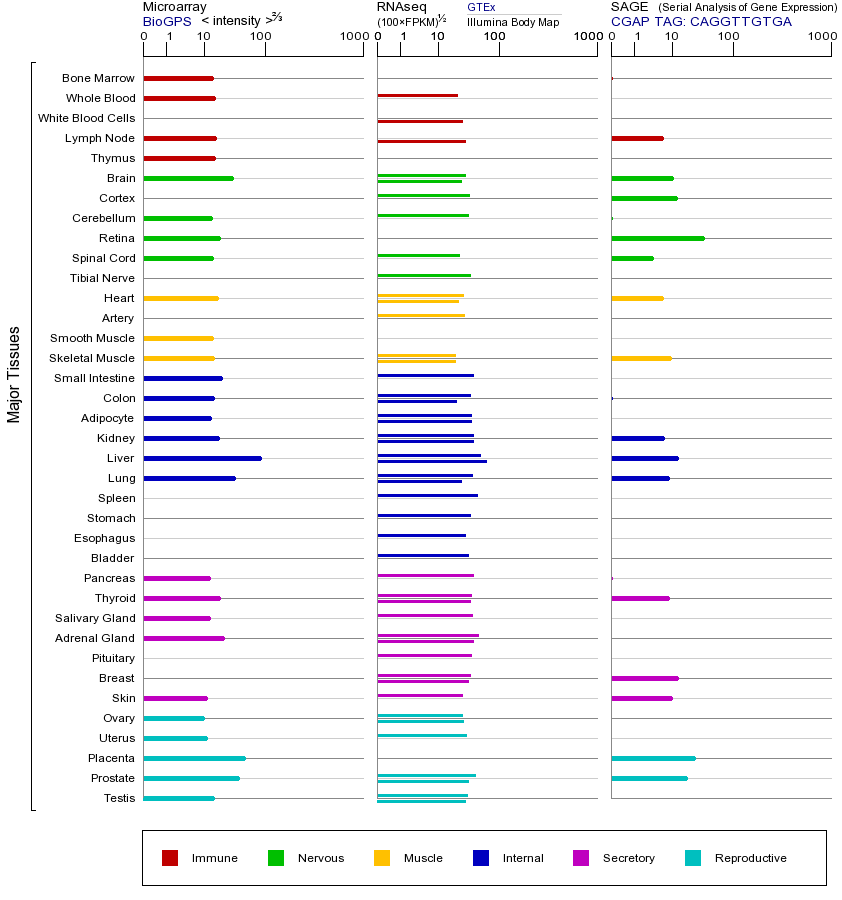
Tissue expression of ACP2:    [UniProt]

Gene expression across tissues
Forward Primer
Forward Tm
Reverse Primer
Reverse Tm
Score
TACAATGGTGAACAAGCCC
58
TCTCCACTGAGAAATTCCCA
58
CCGGCAAGAGGTTTATGTG
59
GAGATGTTCGGGTTGAAGC
59
TTCGGAATCTACCAGCAGG
59
CTTATCTGAGCCAGCAGGA
59
TCTCGGAATGCACAATTTCTG
59
GACATTCCAGACGGTCTCC
60
GTCAGTTAACCAAGGAGGG
58
AAGAGGTGTTTAGGAAGCC
57
CGGAATGCACAATTTCTGGA
59
ATAGACATTCCAGACGGTCTC
59
CTTCGGAATCTACCAGCAG
58
TTATCTGAGCCAGCAGGAC
59
TGGTCAGTTAACCAAGGAGG
59
GAGGTGTTTAGGAAGCCGT
60
CGGCAAGAGGTTTATGTGC
60
GAGATGTTCGGGTTGAAGC
59
TACAATGGTGAACAAGCCC
58
CTCCACTGAGAAATTCCCAG
58
      No data available

Subcellular localization of ACP2 (and its protein):

[UniProt]     [GenomeNet]

" d="M482.414,245.296c3.539,4.293,4.455,10.009,0.202,11 c-4.244,0.996-4.983-10.983-8.293-8.438c-5.271,4.08,9.834,12.271,5.144,17.287c-3.717,3.607-6.172-5.75-10.839-1.976 c-4.673,3.776,6.781,7.299,2.831,11.326c-4.354,4.045-6.979-1.449-9.837-5.517c-1.193-1.742-2.059-3.851-3.595-2.748 c-1.516,1.078-1.854,1.795-0.938,3.666c2.374,4.854,9.235,10.119,5.156,12.535c-5.636,3.346-5.044-8.871-9.426-7.574 c-4.388,1.291,2.557,10.66-1.245,11.141c-4.089,0.545-3.483-10.239-6.979-8.575c-2.522,1.206-0.929,3.071-0.938,4.899 c0.004,1.32-0.964,3.6-2.372,4.062c-3.593,1.171-8.544-1.065-10.251-3.59c-6.04-8.93,0.396-15.997,4.639-7.015 c3.023,4.642,5.182,0.834,2.839-2.219c-1.032-1.354-4.309-5.901-0.781-7.252c2.904-1.113,4.271,1.941,5.985,4.592 c2.61,4.016,5.485,0.117,3.031-3.414c-1.828-2.633-2.74-3.803,3.156-7.42c6.405-4.369,6.52,3.869,10.077,0.646 c2.309-1.832-4.783-5.149,0.06-8.995c2.896-2.293,5.18,6.207,7.961,3.516c3.523-2.737-7.717-7.369,0.117-11.736 C473.413,240.77,480.519,242.891,482.414,245.296z"/> Extracellular space Cytosol Plasma membrane Cytoskeleton Lysosome Endosome Peroxisome ER Golgi Apparatus Nucleus Mitochondrion 0 1 2 3 4 5 Confidence
  • plasma membrane
  • cytoplasm
  • extracellular
  • golgi
  • vesicle
  • cytoskeleton
  • endoplasmic reticulum
  • nucleus
  • endosome
  • lysosome
  • mitochondrion

Gene Ontology (GO) terms for ACP2:

GO ID
Protein
Source DB
GO:0003993
B7Z6U3 (UniProtKB)
IEA
GO:0016311
B7Z6U3 (UniProtKB)
IEA
GO:0003993
B7Z7D2 (UniProtKB)
IEA
GO:0016021
B7Z7D2 (UniProtKB)
IEA
GO:0016311
B7Z7D2 (UniProtKB)
IEA
GO:0003993
E9PHY0 (UniProtKB)
IEA
GO:0016021
E9PHY0 (UniProtKB)
IEA
GO:0016311
E9PHY0 (UniProtKB)
IEA
GO:0003993
E9PKW9 (UniProtKB)
IEA
GO:0016311
E9PKW9 (UniProtKB)
IEA
GO:0003993
E9PP23 (UniProtKB)
IEA
GO:0016311
E9PP23 (UniProtKB)
IEA
GO:0003993
E9PQW9 (UniProtKB)
IEA
GO:0016311
E9PQW9 (UniProtKB)
IEA
GO:0003993
E9PQY3 (UniProtKB)
IEA
GO:0016021
E9PQY3 (UniProtKB)
IEA
GO:0016311
E9PQY3 (UniProtKB)
IEA
GO:0001501
P11117 (UniProtKB)
IEA
GO:0001784
P11117 (UniProtKB)
IEA
GO:0003993
P11117 (UniProtKB)
IEA
GO:0004721
P11117 (UniProtKB)
IEA
GO:0005764
P11117 (UniProtKB)
IDA
GO:0005765
P11117 (UniProtKB)
IEA
GO:0006470
P11117 (UniProtKB)
IEA
GO:0007040
P11117 (UniProtKB)
IEA
GO:0010033
P11117 (UniProtKB)
IEA
GO:0016020
P11117 (UniProtKB)
IDA
GO:0016021
P11117 (UniProtKB)
IEA
GO:0031410
P11117 (UniProtKB)
IEA
GO:0043005
P11117 (UniProtKB)
IEA
GO:0043202
P11117 (UniProtKB)
IEA
GO:0048102
P11117 (UniProtKB)
IEA
GO:0070062
P11117 (UniProtKB)
IDA
GO:0070062
P11117 (UniProtKB)
IDA
GO:0070062
P11117 (UniProtKB)
IDA

microRNAs potentially regulating ACP2:     

String
BioGrid
IntAct
mentha
Loading…
Interacting Gene Interaction Source/Score
Disease Score NofPmids NofSnps Source
Gomez Lopez Hernandez syndrome 0.08 0 0 MGD
Malignant neoplasm of prostate 0.002638474 2 0 BeFree_GAD
leukemia 0.000814326 3 0 BeFree
Keratoconus 0.000814326 3 0 BeFree
Juvenile Neuronal Ceroid Lipofuscinosis 0.000271442 1 0 BeFree
Chronic Periodontitis 0.000271442 1 0 BeFree
Malignant neoplasm of breast 0.000271442 1 0 BeFree
Severe Combined Immunodeficiency 0.000271442 1 0 BeFree
Acute Coronary Syndrome 0.000271442 1 0 BeFree
childhood acute promyelocytic leukemia (M3) 0.000271442 1 0 BeFree
Integrated multi-omics and machine learning prioritize key immune genes for multiple sclerosis risk prediction.
Chen M, Zhao D, Fan H, Zeng X, Zhang W, Li L, Li W Mamm Genome IF: 2.6 2026-03-02
A hybrid assembly mechanism employs nonreducing polyketide synthase-like logic for partially reduced polyketide formation.
Zhang X, Ma C, Deng Z, Ren X, Zhang K, Wang W, Zhou L, Zhu Y, Zhang G, Che Q, Zhu T, Long H, Dong B, Li D Mar Life Sci Technol IF: 5.7 2026-02-00
Multi-omics profiling identifies ACP2 as a lysosome-associated biomarker linked to immune dynamics and clinical outcomes in glioma.
Palekkode N, Liu CH, Chen JB, Solomon DD, Kumar S, Ko CC, Yen MC, Yeh IJ, Xuan DTM, Lin HY, Fathima A, Lee YK, Chang KF, Lin HR, Wang CY, Shih CL, Nguyen NUN Comput Biol Chem IF: 3.4 2026-10-00
Directed evolution of novel AAV variants using the MCMS library for enhanced CNS tropism and reduced liver targeting in mice.
Song Q, Wu J, Zhang Q, Wu S, Luo X, Xu M, Xu Y, Wang G, Yu H, Chen H, Lu Z, Ma L Mol Ther Methods Clin Dev IF: 4.7 2025-09-11
Distinct roles of tandem acyl carrier protein domains in the assembly of a macrocyclic polylactone.
Deelee T, Wattana-Amorn P Chem Commun (Camb) IF: 4.3 2025-10-07

Loading comments...

Log in to post comments Log In Sign Up

Contact

No. 2 Wenbo Road, Zhangqiu District, Jinan, Shandong

Qilu Normal University · Genelibs Bioinformatics Lab

750 Shunhua Rd, Jinan

2F, Bldg F, University Science Park

Tel: 0531-88819269

WeChat Official Account

Follow our WeChat subscription account for real-time updates and the latest in medical and biological research.


Business Email

E-mail: product@genelibs.com

